As global ecosystems face unprecedented degradation and biodiversity decline, protecting natural habitats and building a shared future for all life has become a pressing priority. In this context, Volvo Group China has partnered with the Society of Entrepreneurs & Ecology Foundation (SEE Foundation), the Yingjing County Management Station of the Giant Panda National Park, and local communities to launch the two-phase “Greener Future with Smaller Carbon Footprint” initiative (2021–2025).
This public-private partnership brings together business, NGOs, and communities to advance ecological restoration and sustainable local development. It showcases how corporate leadership can help address environmental challenges while creating scalable models for the future.
Corporate Commitmentto Ecological Challenges
Human expansion continues to threaten fragile ecosystems and endangered species such as the giant panda. Habitat fragmentation and ecosystem loss jeopardize not only iconic wildlife but also regional ecological stability. In response, China’s National Biodiversity Conservation Strategy and Action Plan (2023–2030), issued in 2024, places biodiversity at the heart of the country’s ecological vision.

Over the past five years, Volvo Group China has developed a holistic conservation model that integrates environmental, social, and economic progress. By combining reforestation, community engagement, and public education, the project goes beyond habitat restoration —it demonstrates how corporate initiatives can align ecological impact with social value.
“Volvo Group’s sustainability strategy is anchored in three pillars: Climate, Resource, and People,” said Xie Zhiqiang, Vice President of Corporate Communications, Marketing and Public Affairs, Volvo Group China. “Through the ‘Greener Future with Smaller Carbon Footprint’ project, we combine habitat restoration, community development, and nature education. While rebuilding panda habitats and protecting biodiversity, we also help meet local development needs and encourage more people to take part in environmental protection. This brings our climate-protection and people-care commitments to life in China.”
Improving Panda Habitats and Strengthening Ecosystems
In its first phase (2021–2023), the project focused on reforesting degraded giant panda habitat in Sichuan’s Daxiangling area. Some 16,000 native trees were planted, with follow-up efforts bringing the total to 22,911 to ensure survival. These plantings have helped restore habitat, improve water and soil conservation, support biodiversity, and absorb carbon emissions.
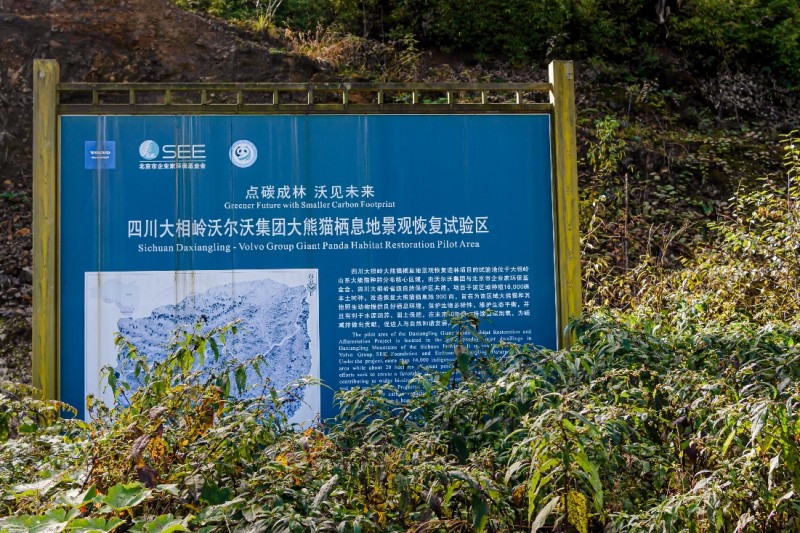
During the project, the restored area was incorporated into the Giant Panda National Park, extending its protection under national oversight.
“Infrared cameras have recorded red pandas, black bears, and other wildlife returning to these forests,” said Fu Mingxia, Deputy Director of the Daxiangling Nature Reserve Management Center. “Their presence shows the habitat is recovering—a sign the project is working.”
BringingNature Education to Communities
The second phase, launched in 2024, expands the effort into community-based nature education. Working with residents in Yingjing County, the project integrates conservation with learning—training local guides, developing nature curricula, and creating the “Jinshan Nature Classroom” and outdoor learning routes. Video and remote resources further extend its educational reach.
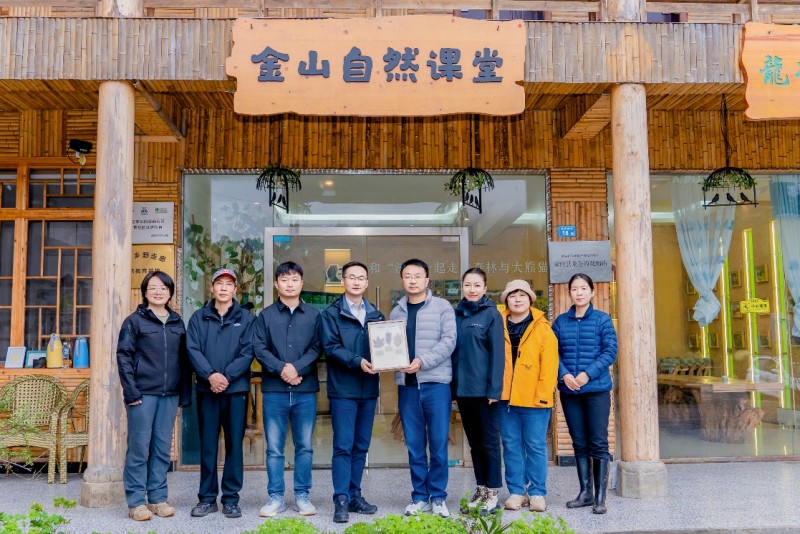
“This project connects habitat restoration with public education—giving people a meaningful way to engage with the Giant Panda National Park,” said Zhang Dongling, Head of Community Communication and Education in Yingjing County.
“From Phase I to Phase II, we have moved from one-way investment to systematic empowerment,” added Xie Zhiqiang. “Our focus has grown from ecosystems to people, shifting from providing support to building capability. This change represents an important step in creating lasting social value through sustainable corporate responsibility.”
BuildingCollaborative Mechanisms for Sustainable Impact
By bringing together corporate resources, nonprofit expertise, and community participation, Volvo Group China has developed a practical and sustainable model for corporate conservation leadership. The project also demonstrated how cross-sector collaboration can benefit both nature and local communities.
As the SEE Foundation’s first successful enterprise-community reforestation effort in Daxiangling, the project has become a reference for similar partnerships. Its methods and outcomes also helped inform the Sichuan Provincial Standard on “Giant Panda National Park Habitat Restoration,” implemented in April 2025. Co-developed by the SEE Foundation, the standard outlines technical procedures and evaluation methods for restoring degraded panda habitats, providing a solid foundation for long-term regional ecological protection.
“We've created a replicable restoration model and technical guidelines that can assist other regions,” said Jiang Zeyin, Director of Ecological Protection and Nature Education at SEE Foundation.
Local communities also see lasting benefits. “This project supports both our environment and our economy,” said Zhang Lihao, First Secretary of Fazhan Village. “We hope it leads to more eco-tourism, linking nature education with homestays and local business.”
One villager, Hu Taifu, offered his property for the project’s nature classroom and now works as a guide. “We used to feel conservation was for experts. Today, we’re part of the solution—making a living while helping our home thrive.”
Looking Ahead
Volvo Group China will continue to explore ways to connect nature conservation with community development. The lessons and models developed through the “Greener Future with Smaller Carbon Footprint” project will be carried forward into the Group’s broader sustainability initiatives, raising public awareness and providing long-term, sustained support for China’s ecological and sustainable development goals.
About Volvo Group
Founded in 1927, the Volvo Group is headquartered in Gothenburg, Sweden, offering trucks, buses, construction equipment, power solutions for marine and industrial applications, financing and services that increase customers’ uptime and productivity.
In 1992, Volvo Group established its first China office in Beijing. With a history of 33 years in China, the majority of the Volvo Group’s business units and service departments are now present across the market, operating in all provinces, municipalities, and autonomous regions. | 